
Expert Advice
Bandage care at home
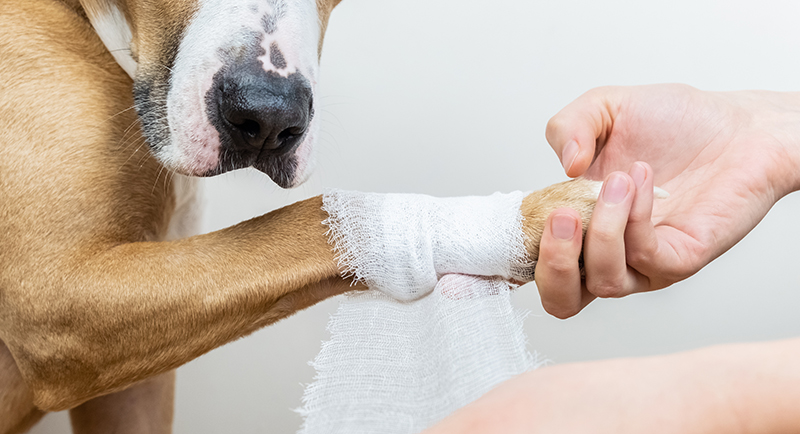
If your pet has been sent home with a bandage, proper care is essential to prevent complications and support healing.
Bandages help protect wounds by keeping the area clean and providing a stable environment for recovery. However, if a bandage becomes wet, dirty, loose, or chewed, it can lead to serious problems.
Possible complications include skin irritation, infection, pressure sores, ulcers, reduced blood supply to the limb, and in severe cases damage to the limb itself. Checking the bandage regularly and keeping it clean and dry will greatly reduce the risk of these issues.
With good homecare, your pet should heal well and return to normal activity soon.
Important Bandage Care Tips
Keep the bandage dry
Keep the bandage dry
Try to prevent your pet from running or playing on dirt, sand, or muddy surfaces until the bandage has been removed.
Prevent licking or chewing
Your pet must not lick or chew the bandage. This can damage the bandage and the wound underneath. If necessary, an Elizabethan collar (cone) may be used to prevent your pet from accessing the bandage.
Bandage removed or damaged?
If your pet removes or damages the bandage, please contact the clinic immediately so it can be replaced.
Bandage Changes and Removal
Your pet’s bandage must be removed or changed by a veterinarian in the timeframe recommended by your vet. Regular checks allow us to monitor healing and ensure the bandage remains safe and effective. Do not attempt to change or remove the bandage yourself.
Monitor Your Pet Daily
Please check your pet’s bandage each day and contact us if you notice any of the following:
- A foul or unusual odour coming from the bandage
- Swelling of the toes, foot, or limb near the bandage
- Your pet appears very uncomfortable or distressed
- Your pet removes or damages the bandage
- The bandage becomes wet or dirty
- The bandage starts to slip or move out of place
Concerned?
If you have any concerns about your pet’s recovery, please contact the clinic.