
Expert Advice
Post-Castration Care — supporting your pet's recovery
Your pet has undergone a castration procedure. Here’s how to help them recover smoothly and comfortably at home.
Your pet has undergone a castration procedure, which involves surgery in a sensitive area. For this reason, your pet will need some care and supervision during recovery.
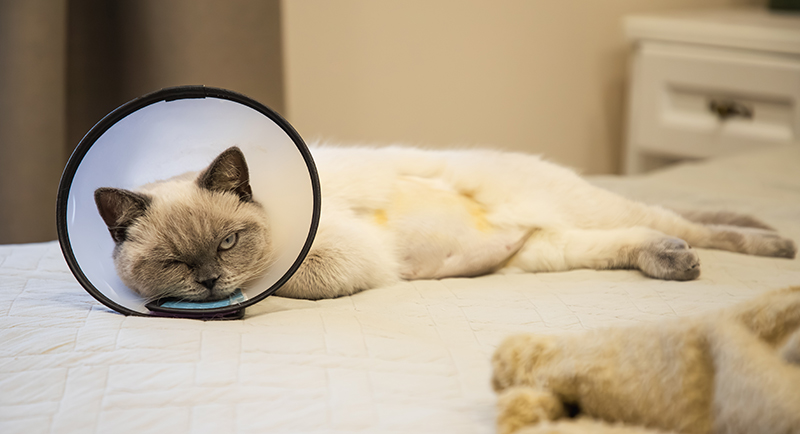
Pets do not always understand that they need to rest after surgery, so your assistance is very important to help ensure a smooth and comfortable recovery.
Immediately After Surgery
When you collect your pet from the clinic, they may still be drowsy or sleepy. This is normal after a general anaesthetic and should gradually wear off over the next 12–24 hours. Some mild bruising or swelling around the surgical site can also occur, similar to what humans experience after surgery.
When you arrive home:
- Keep your pet in a quiet, warm, comfortable area
- Offer small amounts of food and water initially
- Allow plenty of rest and limit activity
Activity and Rest
Many pets recover quickly and may try to run, jump, or play soon after surgery. While this is a good sign, too much activity can put strain on the surgical site and sutures.
- Restrict activity for the first 7–10 days
- Avoid running, jumping, or rough play
- Follow any additional instructions provided by your veterinarian
Signs to Watch For
Complications after castration are uncommon, but it is important to monitor your pet during recovery.
Please contact the clinic if you notice:
- Your pet appears very dull or lethargic, especially after the first 24 hours
- Excessive redness or irritation around the surgical site
- Swelling, discharge, or lumpiness around the sutures
- Your pet licking or chewing the wound excessively
Follow-Up Appointment
Suture removal
Sutures are typically removed 10 days after surgery. Please ensure you book a follow-up appointment so your veterinarian can check the healing progress and remove the sutures.
Concerned?
If you have any concerns about your pet’s recovery, please contact the clinic.